Impact
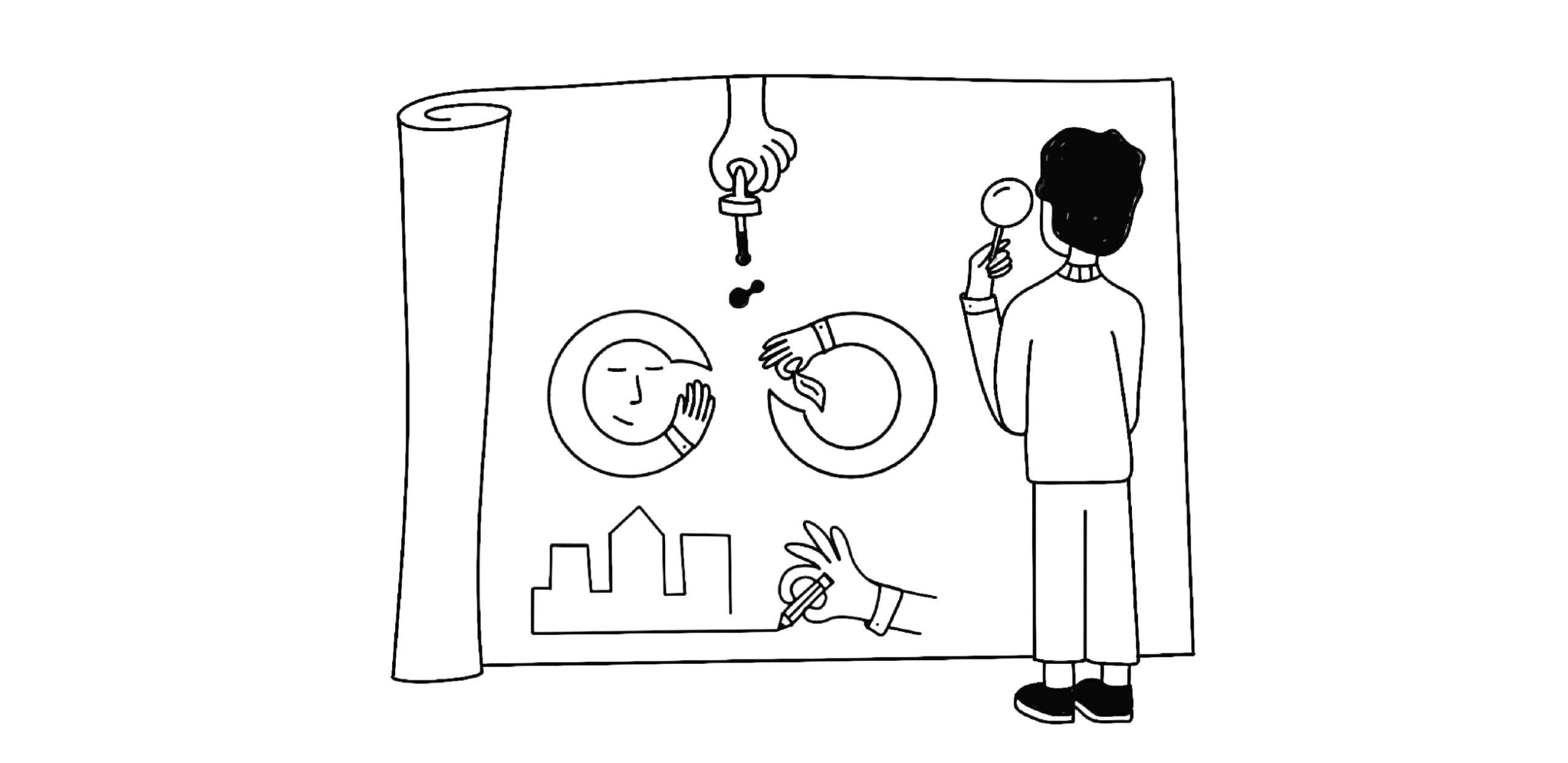
Driven by curiosity and care, Metaform crafts architecture that puts people at its core - spaces that connect, endure, and contribute to a more responsible and socially engaged built environment.
Human-centred architecture for the long term
Architecture, for us, is never merely about constructing buildings; it is about creating places that bring people closer together, spaces where life flows and emotions meet. It is an architecture that inspires, that unites and that enhances quality of life, placing the human being at its very core. Over time, this vision has become clearer and more essential, an architecture of happiness rooted in meaning, justice and emotion. We believe that architecture is not, and will never be, a simple response to a brief; it is an act, an act of faith in beauty, in connection and in the long term. It is a language that expresses who we are, what we choose to pass on and what we refuse to let disappear. In a fragmented world, we advocate for an architecture that repairs, that listens and that embeds humanity in every detail, an architecture of connection between people and places, between past and future, designed to endure, to adapt and to support life in all its richness.
Architecture in Response to the Environment
Environmental responsibility, as part of our values, should be about the right mindset and genuine impact rather than image. Too often, it’s reduced to marketing: just enough “green” features to appear responsible, selling the idea of sustainability without delivering real impact. Green walls, solar panels, rooftop gardens, treeadorned balconies, or eco-themed materials such as timber, clay, or stone do not automatically make a project sustainable and often amount to little more than architectural greenwashing.
Today, 39% of energy-related CO2 emissions come from the building and construction industry. Architects have a great leverage to reduce this number, and therefore carry a big responsibility. (fig.1)
True sustainability begins by considering the entire lifecycle of a building, including the sourcing of construction materials, energy consumption during use, and eventual demolition and waste management.
At Metaform, we strive to integrate different sustainability principles and design strategies into every project. As Shahram Agaajani, Architect and Co-Founder of Metaform, puts it:
“True sustainability is the lifespan of a building. Its capacity to transform. To adapt. To evolve. To build to last is to build to change.”
Design and Knowledge Systems
At Metaform, staying engaged with evolving methods in architecture and construction is part of our daily practice. Knowledge is shared through internal sessions, workshops and exchanges with external experts, creating a continuous process of learning and discussion.
This is supported by two internal systems, DAR and SEED. Together, they structure how we develop, test and apply ideas in practice, from design thinking within projects to research, tools and methods that inform decisions across projects.
SEED
SEED is a knowledge and process system across projects.
SEED focuses on research, tools and methods that support the integration of environmental thinking into architectural practice, bringing together regulatory knowledge, material research and internal systems to inform design decisions in a responsible and long-term way.
The goal is to strengthen knowledge, improve processes and support consistent, informed choices across projects. Materials, resources and environmental impact are considered throughout, as part of a continuous and collective approach embedded at every stage.
DAR
DAR is a relational design system within each project.
DAR – Design, Architecture Research describes an approach where architecture is understood as an interconnected collaboration of multiple disciplines, bringing them together into a holistic approach that shapes the built environment in a responsible and long-term way through design and application.
The goal is future-oriented, durable architecture that responds consciously to its context. The human scale remains central, while materials, resources and the environment are considered as part of a larger, interrelated system.
Principles for Meaningful Impact
Our approach to impact is not defined by isolated gestures, but by a coherent set of principles that guide projects from concept to realization. These principles form a framework for decision-making, ensuring that each intervention is grounded, responsible, and built to endure.